How do you commission robot animation that serves your campaign?
Robot animation for advertising turns a digital character into a performance built around a brand's story. The work can involve character assets, rigging, posing and animation, with rendering and compositing supplied by the agreed production team. It is different from programming a physical robot: the deliverable is an on-screen performance, not a machine that can repeat those movements in the real world.
For a brand or agency, the first decision is what the robot needs to communicate. A memorable entrance, a precise product gesture and a recurring character each call for different planning. This guide explains how to brief the work, review it and agree useful deliverables. It also examines Mimic Productions' documented rigging and animation contribution to an Etisalat campaign, without attributing the wider production to Mimic.
1. Start with the campaign brief, not the robot model
A robot character should have a job in the film. It might introduce a service, make an abstract idea visible or act as a recognisable guide through a story. Write that job in one sentence before discussing metallic surfaces or elaborate movement. If the character is removed from the storyboard, what becomes harder to understand? The answer helps distinguish a useful creative idea from an expensive decorative element.
Define who will watch the campaign, where it will appear and what the audience should remember. A short mobile advertisement offers different reading time and framing from a cinema spot. List the required aspect ratios, durations, languages and versions. These decisions influence staging and animation from the start; a wide arm movement that works beautifully in a landscape composition may disappear in a vertical crop.
Share a script, storyboard or rough sequence of actions alongside visual references. Explain what each reference demonstrates: perhaps its silhouette, restrained movement or sense of weight. Avoid asking the studio to reproduce another brand's character. Identify who owns the supplied designs and which assets may be adapted. If a character already exists, provide the available model, textures, rig and any documentation so suitability can be assessed before the schedule is agreed.
Separate the creative goal from the production responsibilities. Character design, modelling, rigging, animation, lighting, rendering, compositing and sound are connected but distinct tasks. A specialist may be responsible for only some of them. Review Mimic Androids' digital production capabilities and identify the stages you actually need. A clear responsibility list is more useful than assuming that every supplier offers a complete campaign package.
Specify the difference between a film and an interactive experience. A film has an authored sequence; a real-time character may need reusable behaviours, engine compatibility and response logic. If you are still choosing the format, the guide to robots and digital humans for events can help frame that separate decision. Do not treat a polished advertising render as evidence that a physical robot or live conversational system is ready.
2. Connect rigging to the performance you need
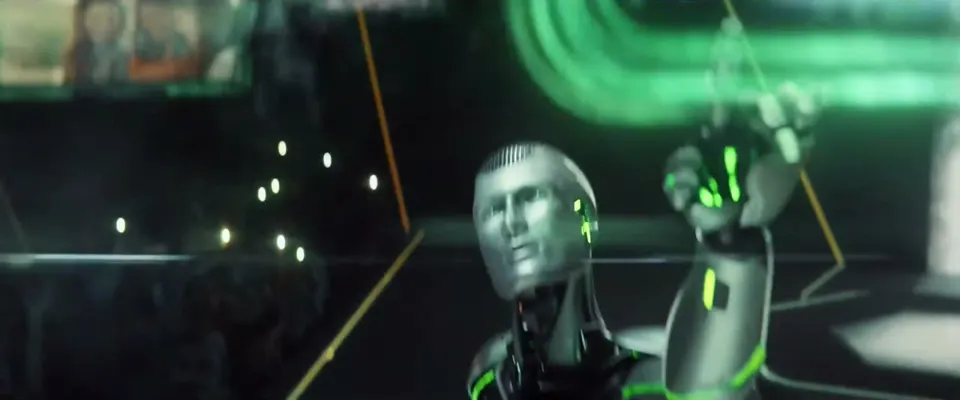
Rigging provides the controls used to pose a digital character. For a robot, these controls need to respect the intended joint structure and the approved visual design. Some characters move with visibly mechanical constraints; others use a deliberately stylised range. The appropriate choice follows the campaign's creative direction. It should be resolved before an animator spends time polishing shots that depend on incompatible movement.
Build a list of required actions rather than requesting a vaguely flexible rig. Does the robot need to point, turn its head, lift an object, dance or address the camera? Are there close-ups of the hands? Which parts must remain rigid, and which can deform? These questions reveal practical requirements. A brief test of the difficult actions can expose control or geometry problems before they spread through a sequence.
Animation gives those poses timing, intention and continuity. A robot can read as heavy or light depending on how it starts, stops and settles. A pause can direct attention toward a product; a small head turn can establish a relationship with another character. Review the action in the context of the shot and edit rather than judging isolated movement as a showreel exercise. Clear communication is more valuable than constant activity.
Facial animation is a specialist part of this wider performance. Some robots have recognisable facial features; others communicate through a visor, head orientation or body gestures. Only commission lip sync and facial controls if the concept needs them. The separate robot facial animation guide explains expression rigs and gaze in more detail. This article focuses on how the whole character supports an advertising production.
Agree how animation will reach the next department. The receiving team may need a particular scene format, rig version, frame rate, scale convention or export method. Ask for a short handoff test early, especially when different studios own assets and final rendering. The technology overview describes Mimic's digital layers; technical compatibility for a specific campaign still needs to be confirmed in the project brief.
3. What the Etisalat project demonstrates
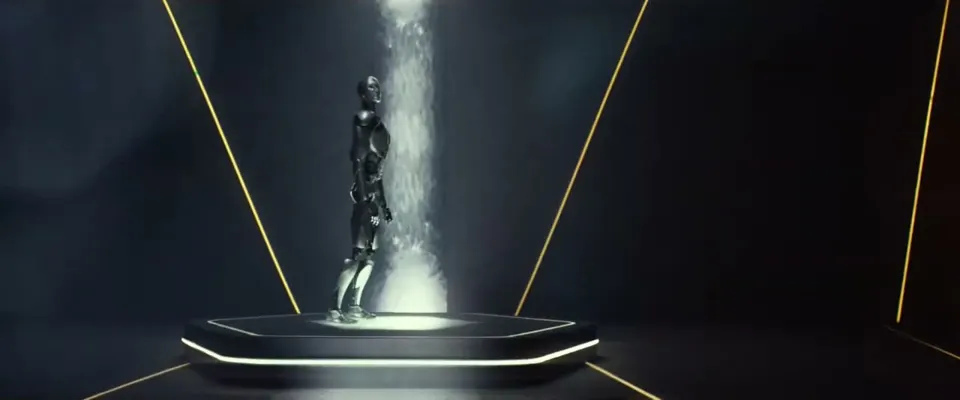
The published Etisalat project record identifies UPP.cz as the client, Etisalat as the brand, Big Kahuna Films as production and IMPACT BBDO as the agency. Mimic Productions' stated services are character rigging and animation. Those credits are the basis for the example here. They do not establish that Mimic designed every asset, directed the film or handled all post-production.
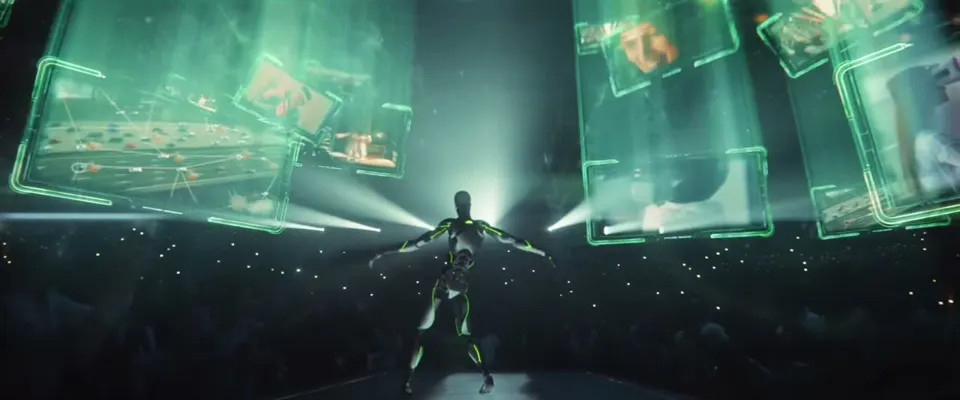
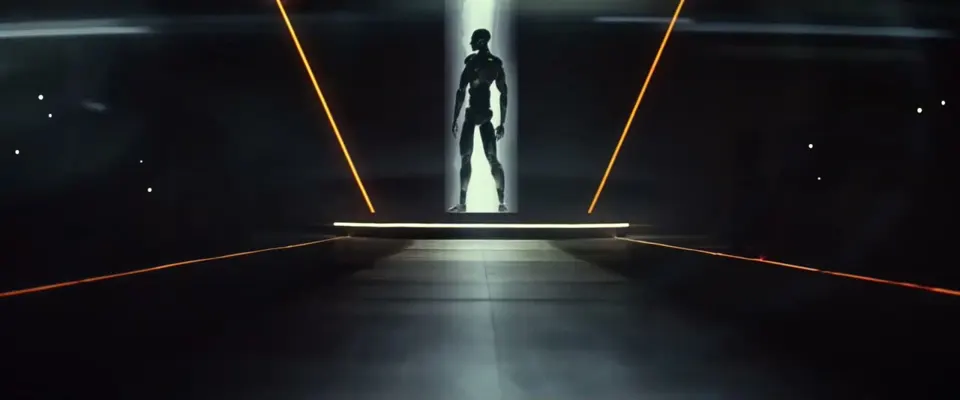
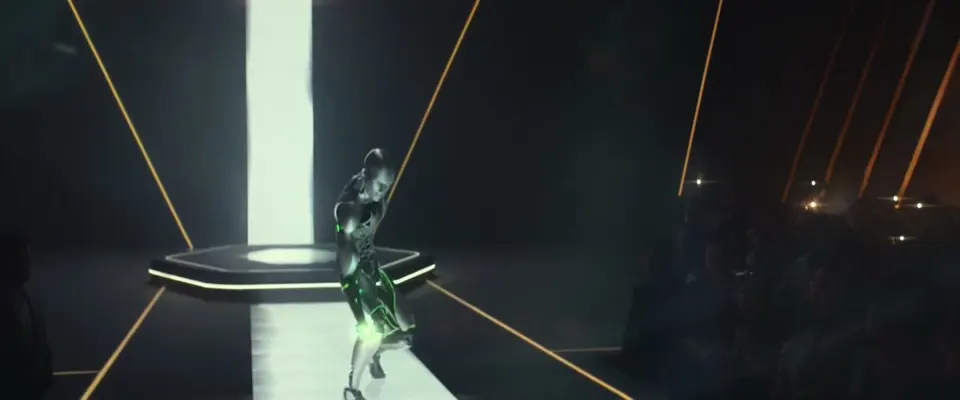
The campaign imagery shows a futuristic robot performing in a theatrical setting, with luminous screens and live-action scenes forming part of the wider film. That context illustrates an important production distinction: the audience sees a unified result, while several teams may have contributed different elements. A clear scope lets a specialist concentrate on the character controls and movement needed by the wider production.
The verified lesson is about contribution and collaboration, not an invented marketing outcome. Mimic's role connects the controls needed to pose the digital character with its animated performance. The public project record does not supply campaign conversion rates, production hours, a software list or a detailed approval schedule. Those details should not be inferred from the finished frames. The stills in this article are campaign references, not screenshots of a rigging interface.
For a prospective client, the useful question is whether the documented work resembles the contribution your production needs. Review the Etisalat project on Mimic Androids, then describe which tasks you want a team to take responsibility for. A film production requiring character rigging and animation has a different brief from a research group developing an interactive robot face.
Other projects help define that boundary. The Sophia project concerns digital facial work, while Sociobot concerns face and expression contributions. These are related disciplines, but they are not interchangeable case studies. Select references for the actual deliverable you are commissioning, and keep platform development, hardware and third-party contributions properly attributed.
4. Agree reviews, deliverables and production scope
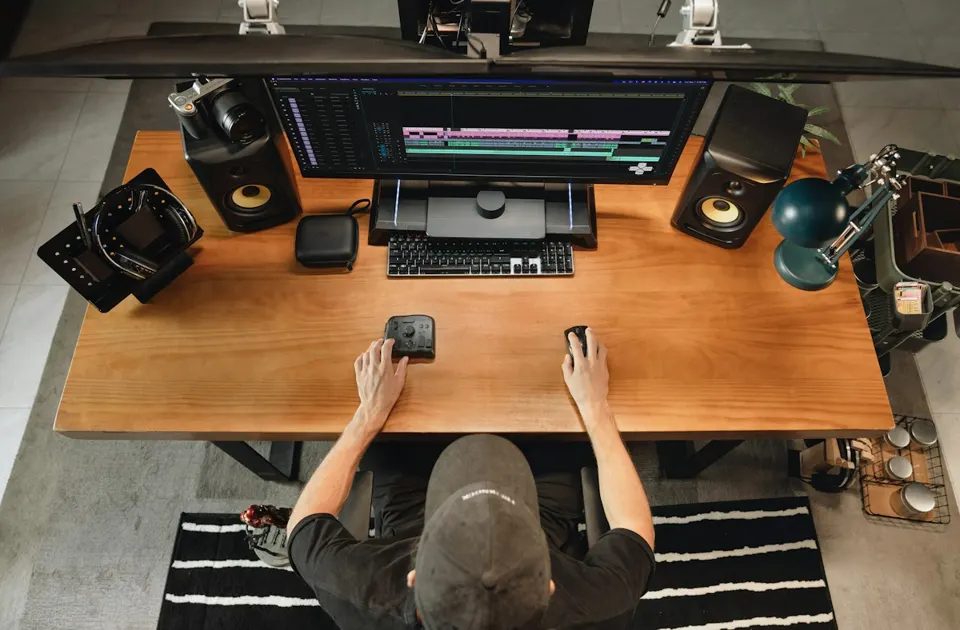
Set approval stages before production begins. A practical sequence might cover the brief and references, asset readiness, a rough performance pass, refined animation and technical delivery. This is a suggested commissioning structure, not a claim about the internal process of a particular past campaign. Each stage should answer a specific question so that a decision about the character's direction is not postponed until final rendering.
Review rough movement at the right level. Early animation can establish the action, screen direction and timing without finished lighting or materials. Collect feedback from the people who can approve the work, consolidate contradictory notes and identify which comments are required changes. A single agreed feedback document is easier to act on than scattered messages from reviewers who have different versions of the shot.
Discuss budget through scope rather than a universal price for robot animation. Useful inputs include the number and length of shots, whether assets already exist, the complexity of the rig, close-up requirements, the number of versions and the expected revision rounds. Changes to the character after animation approval can affect several departments. The supplier should explain what is included and what would trigger a revised estimate; no fixed project price is implied here.
List the deliverables explicitly. The contract may require animation scenes, baked animation, preview movies, rendered sequences or source assets, but not every engagement includes all of them. Confirm who owns the rig, what reuse is permitted and whether future campaign variations need additional work. File compatibility and a usable handoff are part of delivery, not details to discover after creative approval.
If your idea is still too open for a production estimate, a scoped development stage may help define it. The concept-to-digital-prototype guide explains how to establish purpose and review criteria before a larger commitment. For an advertising enquiry, send the campaign objective, available references, required actions, intended formats and target delivery date. This gives the team a concrete starting point for a scope discussion.
Frequently asked questions
What is robot animation for advertising?
It is the creation of an on-screen robot performance for a campaign or branded film. The agreed scope may include rigging and character animation, while other teams handle design, lighting, rendering, editing or sound. It does not mean programming or manufacturing a physical robot.
Can Mimic work with an existing robot character?
An existing character can be a starting point, subject to asset quality, usage rights, rig suitability and the receiving production pipeline. Share the available files and the actions required so the team can assess what can be reused and what needs additional work.
What is the difference between rigging and animation?
Rigging creates the controls used to pose a digital character. Animation uses those controls to create movement and performance over time. A model can look complete while still lacking the controls needed for the planned shots, so asset readiness should be reviewed early.
Does every robot character need facial animation?
No. Some concepts communicate through body movement, head orientation or a simple display. Facial rigging and lip sync should follow the creative requirements. A close-up speaking character usually needs different controls and review criteria from a distant robot performing a physical action.
How much does a robot animation campaign cost?
A useful estimate depends on the assets available, shot count, duration, movement complexity, delivery formats and review scope. Ask for a proposal that separates responsibilities and assumptions. This guide does not quote a universal price or imply that all production services are included.
How long does robot animation take?
The schedule depends on asset readiness, the number and complexity of shots, review availability and technical handoffs. Agree milestones after the brief is reviewed. A short film can still require substantial development if the character or performance direction is not yet defined.
What did Mimic contribute to the Etisalat campaign?
The published project record credits Mimic Productions with character rigging and animation through UPP.cz. It identifies Etisalat as the brand, Big Kahuna Films as production and IMPACT BBDO as the agency. The wider campaign should not be attributed solely to Mimic.
Can the same animation be reused in future campaigns?
Potentially, but reuse depends on the contract, asset ownership, available source files and technical requirements. New formats or actions may need additional animation or rig changes. Agree future-use expectations and deliverable access before production rather than assuming unrestricted reuse.
What should I send when requesting a proposal?
Send the campaign objective, audience, script or storyboard, character references, available assets, required actions, formats and target date. Identify which production stages need support and who will approve the work. These details help the team define a realistic scope and identify missing inputs.
Plan your next step
A successful robot advertising performance begins with a clear creative role and an agreed production scope. Define what the character must communicate, which actions the rig must support and how the work will move between collaborators. Use documented project contributions to assess relevant experience, then make the deliverables and review process explicit before committing to production.
Discuss robot animation for your campaign. Share your brief, references and required deliverables with Mimic Androids so the team can assess the digital character work your production needs.